Chiropractic Care for Flat Head Syndrome: Supporting Healthy Head Shape and Development
Noticing a flat spot on your baby’s head can be concerning, especially when you’re unsure what’s causing it or whether it will resolve on its own. Flat Head Syndrome is common in infants and, when addressed early, responds very well to gentle, conservative care.
Understanding why flat spots develop—and how whole-body support can help—can make a meaningful difference during your baby’s early months.
What Is Flat Head Syndrome?
Flat Head Syndrome occurs when a baby develops one or more flat areas on the skull, resulting in a misshapen head shape. Because an infant’s skull is soft and highly moldable, pressure applied to one area for extended periods can quickly lead to flattening.
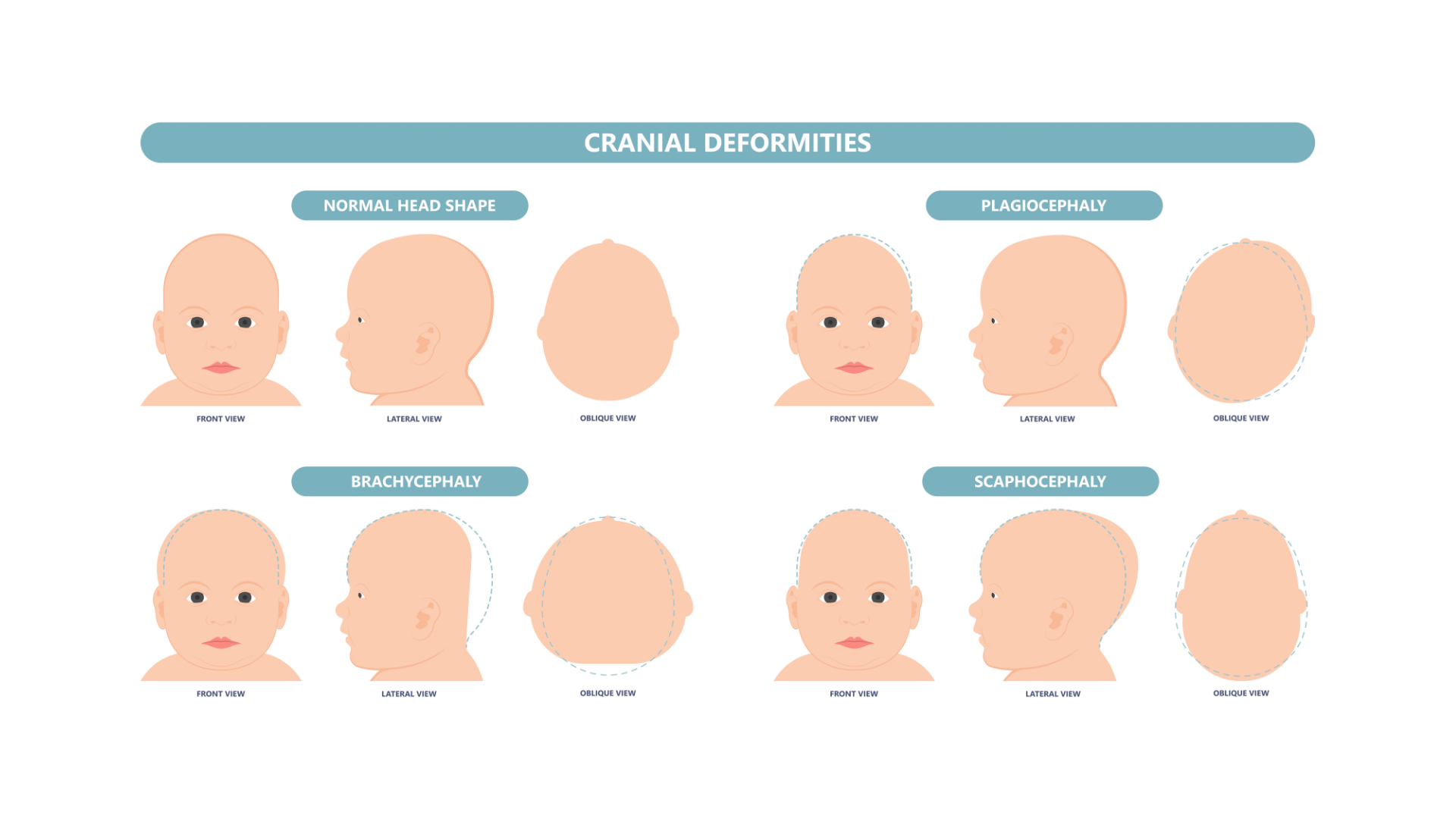
You may hear flat head syndrome referred to by different clinical names depending on the location and pattern of flattening:
Plagiocephaly – flattening on one side of the back of the head
Brachycephaly – flattening across the back of the head, creating a wider head shape
Scaphocephaly – a long, narrow head shape with flattening along the sides
What Causes Flat Spots in Babies?
Flat spots develop when repeated pressure is placed on the same area of the skull. Common contributing factors include:
Limited head movement or preference for one position
Positioning in the womb due to intrauterine constraint, which is more common with breech babies or multiples
Prolonged time lying on the back (which is recommended for safe sleep)
Torticollis, a condition involving tight neck muscles that restrict movement and head rotation
When babies are unable to move their heads freely, the skull is more likely to flatten in one area.
Signs and Head Shape Changes to Watch For
Flat head syndrome may present with one or more of the following:
Diagonal or oval-shaped head
Flattening on one side of the back of the head
Head tilt or neck tightness
One ear positioned more forward than the other
Prominence on one side of the forehead
One cheek appearing fuller than the other
These changes often occur gradually, making early awareness especially important.
Understanding the Three Common Head Shapes
Plagiocephaly
Typically presents with flattening on one side of the back of the head, facial asymmetry, and ear misalignment. This type is often associated with torticollis.
Brachycephaly
Characterized by flattening across the back of the head, creating a wider appearance. The head may appear taller from the side, and the forehead may slope.
Scaphocephaly
Results in a long, narrow head shape with flattening along the sides. The back of the head may appear fuller than average.
How Chiropractic Care Supports Flat Head Syndrome
Gentle pediatric chiropractic care focuses on addressing the underlying causes of head flattening—not just the head shape itself. Treatment may include:
Gentle chiropractic adjustments to support normal joint and neck motion
Cranial work to reduce tension and encourage symmetrical skull movement
Stretching and strengthening exercises to balance muscle tone
Repositioning guidance tailored to your baby’s specific head shape
By improving mobility and reducing areas of tension, the body is better able to naturally reshape as your baby grows.
When Should Treatment Begin?
As early as possible. There is no benefit to waiting when it comes to flat head syndrome. Because a baby’s skull is softest in the early months, conservative treatment is most effective when started early.
Ideally, babies should begin care before five months of age if the goal is to improve head shape without helmet therapy.
Is It Ever Too Late to Start Care?
After about five months, the skull becomes less moldable, and helmet therapy may be recommended to correct head shape. However, chiropractic care remains valuable at any age to address:
Neck and body tension
Muscle imbalances
Torticollis-related movement restrictions
Even when helmet therapy is used, supporting the whole body can improve comfort and developmental outcomes.
How Common Is Flat Head Syndrome?
Flat head syndrome is very common, affecting approximately 1 in 2 babies. The good news is that with early awareness and timely care, it is often preventable and highly responsive to conservative treatment.
Because babies grow so quickly, the window for early intervention is limited—making prompt evaluation especially important.
Which Babies Are at Higher Risk?
Some babies are more likely to develop flat spots, including:
Multiples, due to limited space in the womb
Breech babies, who experience prolonged positioning pressure
Premature infants, who have softer skulls and may spend extended time in the NICU
Babies with torticollis or limited neck movement
A Gentle Invitation
If you’ve noticed a flat spot, head tilt, or limited neck movement in your baby, early support can make a lasting difference. Gentle pediatric chiropractic care can help address tension, improve movement, and support healthy head shape and development. If you’d like to learn more or schedule an infant evaluation, we’re here to support you and your baby.