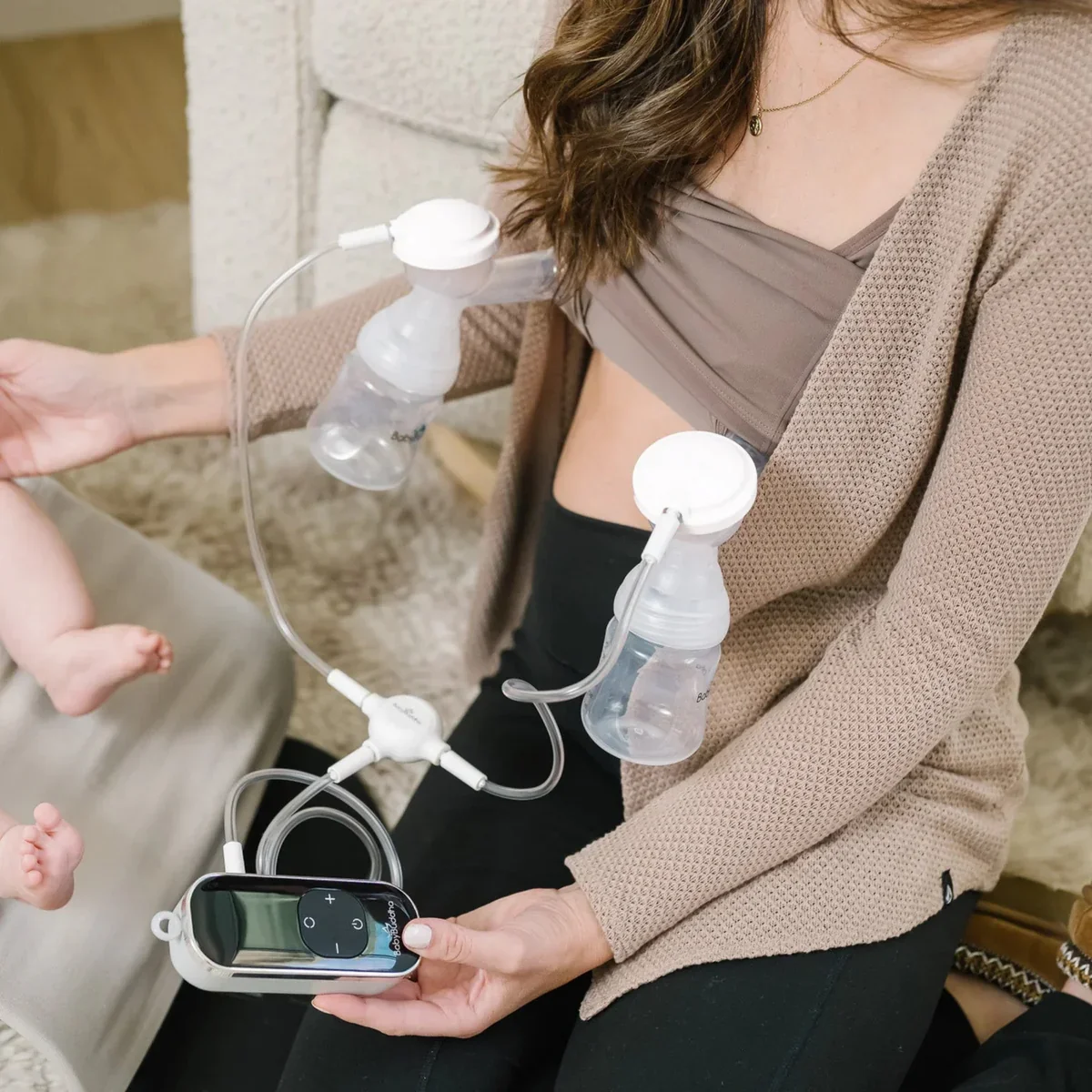
When choosing a portable breast pump, many parents assume they’ll need to sacrifice suction strength or milk removal for convenience. Wearable pumps can be helpful for occasional pumping, but they don’t always provide the consistent stimulation and effective milk removal needed for exclusive or frequent pumping.
The BabyBuddha 3.0 was designed differently. It combines portability with the strength and customization you would expect from a primary daily breast pump—making it an option for pumping at work, exclusively pumping, increasing milk supply or simply having more freedom during pumping sessions.
As an International Board Certified Lactation Consultant (IBCLC), one of the biggest concerns I hear from pumping parents is:
“I need to pump consistently, but I don’t want to be stuck next to an outlet all day.”
That is where a compact pump like the BabyBuddha 3.0 can be especially helpful.
A Portable Pump That Can Be Used as Your Main Pump
There is an important difference between a pump that is portable and one that is only intended for occasional pumping.
Many completely wearable pumps sit inside the bra and are designed primarily for convenience. While they can be useful in certain situations, some parents notice that they do not remove milk as effectively as their traditional pump. Incomplete milk removal can become especially problematic for parents who are exclusively pumping, working to establish milk supply or replacing several breastfeeding sessions each day.
The BabyBuddha 3.0 is small and portable, but it is built to function as a true primary breast pump. Its compact motor can be worn on the included lanyard, allowing you to move around while still using a traditional flange and bottle setup.
This makes it a practical choice for:
Exclusive pumping
Frequent daily pumping
Pumping while returning to work
Maintaining milk supply while separated from your baby
Pumping after breastfeeding
Increasing stimulation during a milk-supply plan
Parents who need stronger, more customizable suction
No pump is the perfect fit for every person, but portability does not automatically mean a pump should only be used as a backup.
What’s New With the BabyBuddha 3.0?
One of the most notable updates to the BabyBuddha 3.0 is its new Double Drop expression mode.
The Double Drop pattern provides two pulling sensations within each suction cycle. This gives parents another rhythm to try when looking for the combination that best supports their letdown and milk flow.
Some people respond best to faster, lighter stimulation, while others need a slower or stronger pulling pattern. Having more options allows you to experiment without assuming that the strongest setting will automatically produce the most milk.
Pumping should not be painful. Start at a comfortable suction level and gradually adjust it based on your body’s response.
Five Flange Insert Sizes Are Included
Flange sizing is one of the most common sources of pumping discomfort and confusion.
The BabyBuddha 3.0 EasyFit Flange System comes with five insert sizes ranging from 13 mm to 21 mm. This gives parents several sizing options immediately, without requiring them to purchase a separate set of inserts before they can comfortably use the pump.
A properly fitted flange can help:
Reduce nipple rubbing and swelling
Improve comfort
Support more effective milk removal
Minimize excess breast tissue being pulled into the tunnel
Reduce the risk of nipple damage
Make frequent pumping more sustainable
Your flange should allow the nipple to move freely through the tunnel without significant rubbing or large amounts of surrounding breast tissue being pulled inside.
Keep in mind that flange size can change throughout your pumping journey. If pumping is painful, your nipples appear swollen after pumping or your breasts still feel full afterward, it may be time to reassess your flange fit and overall pumping setup.
Portability Without Being Tied to a Wall
One of the biggest benefits of the BabyBuddha is the ability to wear the pump motor on its lanyard rather than remaining seated next to an outlet.
You may be able to pump while:
Preparing meals
Getting ready for work
Completing simple household tasks
Caring for an older child
Moving between rooms
While working
You will still need to be mindful of the bottles and tubing, but the lightweight motor gives you considerably more mobility than a traditional pump that must remain plugged in.
A supportive pumping bra can also help keep the flanges stable and allow you to pump hands-free.
A Sample Pumping Routine
Your ideal pumping schedule depends on your baby’s age, your milk-supply goals and whether you are breastfeeding, exclusively pumping or combination feeding.
A pumping parent’s workday might look something like this:
Breastfeed or pump before leaving home
Pump during the morning
Pump around lunchtime
Pump during the afternoon
Breastfeed or pump after returning home
Add an evening or overnight session if needed to support milk supply
The BabyBuddha’s portability makes it easier to bring the pump between home, work and daily activities without carrying a large motor.
However, the pump you choose is only one part of a successful pumping plan. Pumping frequency, flange fit, suction settings, session length and how well your breasts are being drained all matter.
Tips for More Comfortable and Effective Pumping
To get the most out of any breast pump:
Confirm your flange size rather than relying solely on the standard flange included with a pump.
Use the lowest suction level that effectively removes milk. Stronger suction is not always better.
Center your nipple in the flange tunnel before beginning.
Use a supportive pumping bra to maintain a good seal.
Try breast massage and gentle compressions during pumping.
Replace worn pump parts as recommended.
Pay attention to changes in comfort, output and how your breasts feel after pumping.
Work with an IBCLC if pumping is painful, output suddenly decreases or you are concerned about your milk supply.
Is the BabyBuddha 3.0 Right for You?
The BabyBuddha 3.0 may be a good option if you want a compact pump but do not want your portable pump to function only as an occasional backup.
Its stronger suction options, customizable modes, Double Drop expression pattern and five included flange insert sizes make it especially appealing for parents who pump frequently and need a system that can travel with them.
The best breast pump is ultimately the one that fits your body, responds well to your milk-ejection reflex and works realistically within your daily routine.
If you need help choosing a pump, finding your flange size or creating a pumping schedule, I offer both in-person and virtual lactation consultations. Together, we can look beyond the pump itself and make sure your entire setup supports comfortable, effective milk removal.
Save on the BabyBuddha 3.0
Ready to learn more?
Shop the BabyBuddha 3.0 here using my affiliate link.
Use code DRKARA to save 10%.
Affiliate disclosure: This post was created in partnership with BabyBuddha. I may earn a commission when you purchase through my affiliate link, at no additional cost to you. As always, my recommendations are based on my professional experience and the individual needs of pumping parents.