Postpartum Neck & Back Pain Relief in Danville, CA: Why Breastfeeding and Carrying Baby Strain Your Body

Does your neck, upper back or low back ache after hours of feeding, rocking and carrying your baby?
Maybe you:
- Feel tightness in your neck or shoulders while feeding
- Have an ache between your shoulder blades by the end of the day
- Carry your baby on the same hip and feel one side getting sore
- Have low back or hip pain that started after birth
- Notice pain in your wrist or at the base of your thumb from lifting
- Feel like you're hunched over your baby most of the day
Many moms assume this is just part of having a newborn.
I love getting a good massage! But what I often hear from my postpartum mamas is that their massage didn't go deep enough, or that they still hurt afterward.
Aches and soreness are common while your body recovers. ACOG lists back, neck and joint pain among the common postpartum aches, linked to muscle strain, weakened abdominal muscles and hormone changes. But common doesn't mean you have to live with it. Pain that lingers can be a sign that your body is compensating for the way you're feeding, carrying and recovering.
At The Well Chiropractic & Lactation Support, Dr. Kara Rangel, DC, IBCLC combines postpartum chiropractic care, focused soft tissue therapy and lactation support to look at both sides of the picture: your body and how you're feeding.
If your neck and back hurt after baby, the question isn't simply:
“How do I push through this?”
What is my body doing to keep up, and how can we ease it?
In this article (11 sections)
- Why Does Postpartum Neck and Back Pain Happen?
- Neck Pain From Breastfeeding: Can Feeding Positions Cause It?
- Could Birth, a C-Section or Core Changes Be Contributing?
- Postpartum Massage vs. Postpartum Chiropractic Care: What's the Difference?
- Why See a Postpartum Chiropractor Who Is Also an IBCLC?
- What Does a Postpartum Chiropractic Visit in Danville Look Like?
- What Can I Try at Home for Postpartum Neck and Back Pain?
- When Can I Get a Massage or Chiropractic Care After Giving Birth?
- When Should I Call My Provider?
- Postpartum Chiropractic + Lactation Support in Danville & the East Bay
- Postpartum Neck & Back Pain: Frequently Asked Questions
Why Does Postpartum Neck and Back Pain Happen?
There usually isn't one single cause. Common contributors include:
Feeding positions
Looking down at baby for long stretches pulls your head forward and rounds your shoulders, straining the neck and upper back. This is true whether you're breastfeeding, pumping or bottle-feeding.
Constant lifting and carrying
Car seats, strollers, carriers and a growing baby (plus a toddler, for some of us) load your back, shoulders and wrists, often on one side.
Core and pelvic changes
After pregnancy and birth, your abdominal muscles and pelvic floor are recovering. Weakened or separated abdominal muscles (diastasis recti) can shift more work to your back and hips.
Birth and recovery
A long labor, pushing positions or a C-section can leave tension in the hips, low back and around scar tissue.
Sleep and stress
Little sleep and high stress make muscles tighter and pain feel worse.
Hands and wrists
Repetitive lifting and gripping can irritate the thumb and wrist, a problem often called de Quervain's tenosynovitis or “mom thumb.” If you have swelling or sharp pain at the base of your thumb, get it evaluated.
You're far from alone. ACOG notes that back pain from pregnancy usually resolves after birth, but for some women it lasts for months, and a 2025 paper in Frontiers in Medicine reports that rates of postpartum low back pain in the research range from 2% to 75%. In other words, every mom's recovery looks different.
Neck Pain From Breastfeeding: Can Feeding Positions Cause It?
They can contribute. Feeding is a whole-body activity for you as well as for your baby, and small setup changes can take a lot of strain off your body. ACOG's own tips for easing postpartum strain include supporting your arms and back and bending your elbows rather than your wrists while you feed.
Easy feeding-position fixes
- Bring baby to you instead of leaning toward baby. Pillows or a nursing cushion can raise baby to chest height.
- Support your arms and back so your shoulders can relax down away from your ears.
- Try to keep your ears roughly over your shoulders instead of craning forward.
- Switch positions and sides during the day so one area isn't doing all the work.
- If you pump, set up at a comfortable height so you aren't hunching over the pump.
- Take short breaks to stretch, even for a minute.
If feeding is painful or baby isn't latching well, lactation support in Danville can make a big difference for both of you.
Could Birth, a C-Section or Core Changes Be Contributing?
Absolutely. Your body went through a lot, and it takes time to rebuild strength and coordination. A long labor, pushing positions or a surgical birth can leave areas of tension, and a recovering core can shift more work to your back and hips.
If you had a C-section or a significant tear, scar release therapy uses targeted techniques to soften and mobilize scar tissue and restore natural movement. If you're concerned about abdominal separation or pelvic floor symptoms, ask your provider about a pelvic floor physical therapy evaluation as well.
Postpartum Massage vs. Postpartum Chiropractic Care: What's the Difference?
Both can feel great after baby. They just do different jobs. Here's how a typical relaxation-focused postpartum massage compares with a Root Cause Reset visit with a chiropractor who is also a lactation consultant:
| Feature | Typical postpartum massage | Root Cause Reset with a chiropractor and IBCLC |
|---|---|---|
| Main goal | Relaxation and stress relief | Focused relief for specific areas of tension and restricted movement |
| Starts with | A short chat about comfort and preferences | A 30-minute exam and health history on your first visit |
| Pressure | Usually light to moderate | Firm and targeted when appropriate, adjusted to your preferences |
| Focus | Often the whole body | The areas that bother you most, such as your neck, upper back or low back |
| Feeding and carrying | Not usually part of the visit | Dr. Kara is also an IBCLC and can look at how you feed and carry baby |
| Joint work | Not typically included | Optional chiropractic adjustment |
| Plan afterward | Varies | An explanation of what was found plus home guidance |
I love a good massage. If you've had plenty of them and still hurt, the third column may be the missing piece.
Want focused work on your neck and back? Start with an exam.
Why See a Postpartum Chiropractor Who Is Also an IBCLC?
If you see a lactation consultant, the focus is understandably feeding. If you see a chiropractor, the focus is typically your body. But sometimes the two overlap.
As both a Doctor of Chiropractic and an International Board Certified Lactation Consultant (IBCLC), I can look at how your posture, joints, muscle tension and feeding setup interact. That can be especially helpful when you notice things like:
- Neck or shoulder pain that gets worse during feeding
- Pain on one side that matches the way you hold or carry baby
- Back pain that started or worsened after birth
- Discomfort that doesn't improve with rest
Instead of only treating where it hurts, we can look at why it hurts and what's happening during the hours you spend feeding and carrying.
What Does a Postpartum Chiropractic Visit in Danville Look Like?
The Root Cause Reset is built for moms who want more than a relaxing hour. Your first visit is 80 minutes:
A 30-minute exam and health history
I look at your posture, movement and the areas that hurt, and review how you're healing.
A 50-minute hands-on session
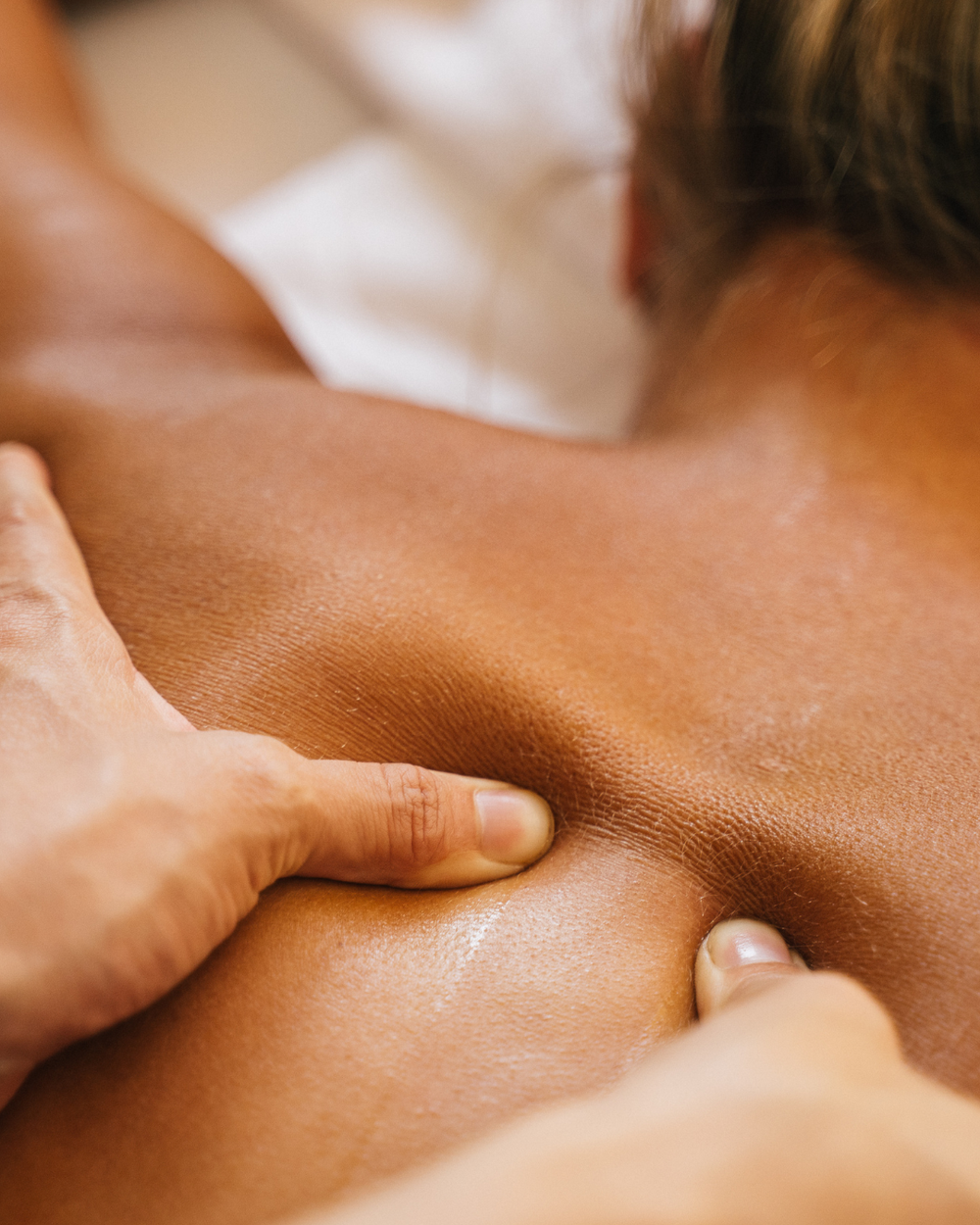
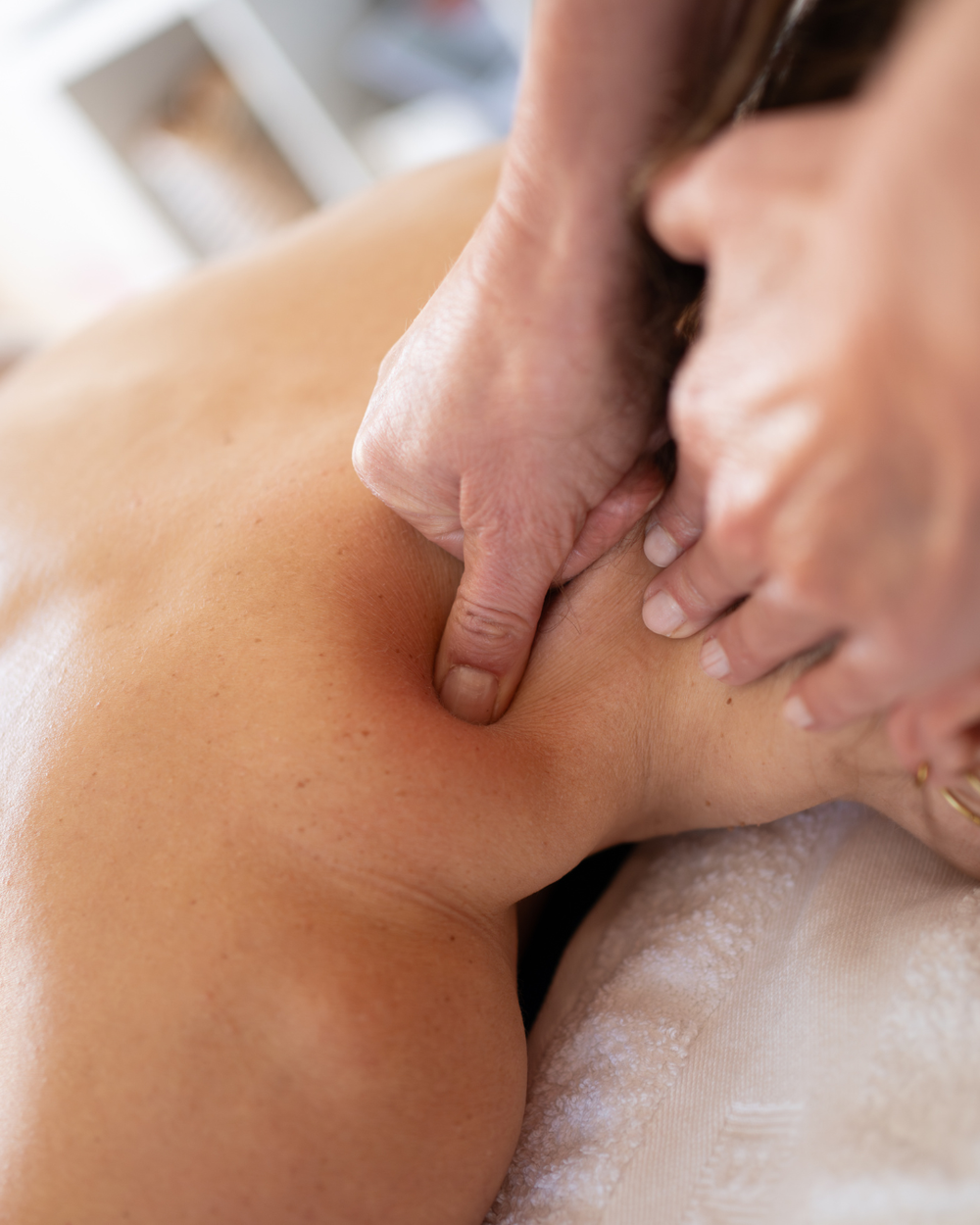
Focused soft tissue therapy such as trigger point release, deep muscle release, stretching and, when appropriate, cupping or scraping on your tight spots.
An optional chiropractic adjustment
It's included if you'd like one.
Pressure that works for you
We talk about your pressure preferences at the start, and I check in with you throughout. The work can feel deep and intense, but the goal is for it to feel productive, not harmful.
Possible marks
Cupping and scraping can leave temporary marks. They're typically not painful and usually fade over several days.
Home guidance
Exercises and habits to use between visits.
Dress so I can get to the areas you want me to focus on. Loose clothing works well, and comfortable underwear and a bra are fine underneath. Dresses aren't a good choice, and gowns are available if you need to change.
Your first visit is $275 and includes the exam, a $375 value. A package of three sessions is $699.
What Can I Try at Home for Postpartum Neck and Back Pain?
Try these at home
- Heat. Heating pads on the neck or back can ease tight muscles. Use a towel between the pad and your skin.
- Doorway chest stretch. Place your forearm on a doorframe and gently lean forward until you feel a stretch across your chest.
- Shoulder blade squeezes. Gently draw your shoulder blades back and down a few times.
- Chin tucks. Slide your chin straight back, as if making a double chin, and hold for a few seconds.
- Switch sides. Alternate which hip or arm you carry baby on.
- Short walks. If you've been cleared for activity, gentle movement can ease stiffness.
Stop if anything hurts or makes your symptoms worse, and check with your provider if you aren't sure what's right for you.
When Can I Get a Massage or Chiropractic Care After Giving Birth?
Most of the time, you can come in as soon as you feel ready.
I see moms who are a few days postpartum and moms who are months postpartum. Before your visit, I review your exam form to make sure there are no red flags or reasons to wait.
When Should I Call My Provider?
ACOG notes that most postpartum discomforts are normal, but they should not prevent you from taking care of yourself and your baby. Some symptoms need medical attention, not bodywork.
Contact your provider promptly if you have:
- A fever above 100.4°F
- Heavy bleeding that soaks through two pads an hour for more than an hour or two
- A headache that doesn't improve with medicine, or a severe headache with vision changes
- Worsening pain, redness or discharge at a C-section incision or tear
- Red streaks or a painful new lump in the breast (possible mastitis). The Well also offers ultrasound therapy for clogged ducts and mastitis, but call your provider first if you have a fever.
- Pain, swelling or tenderness in one leg, or severe lower abdominal pain (seek emergency care)
- Chest pain or trouble breathing (call 911)
- Hopelessness that lasts more than 10 days after delivery, or any thoughts of hurting yourself or your baby. Tell your provider right away. In the US, you can call or text 988 at any time, and you can call 911 if you're in immediate danger.
Postpartum Chiropractic + Lactation Support in Danville & the East Bay
At The Well Chiropractic & Lactation Support, Dr. Kara Rangel, DC, IBCLC provides postpartum chiropractic care, focused soft tissue therapy and lactation support in Danville, with additional availability in Livermore.
If you're searching for postpartum massage in Danville, CA and want something more targeted than a relaxation massage, the Root Cause Reset combines an exam, focused bodywork and an optional adjustment in one visit.
Families visit The Well from throughout the East Bay, including:
- Danville
- Alamo
- San Ramon
- Walnut Creek
- Lafayette
- Pleasant Hill
- Livermore
- Pleasanton
- Dublin
- and surrounding communities
Postpartum Neck & Back Pain: Frequently Asked Questions
Why do my neck and back hurt after having a baby?
Usually it's a mix of feeding positions, repeated lifting and carrying, recovering core and pelvic muscles, hormone changes, and little sleep. A short exam can help sort out which factors matter most for you.
How long does postpartum back pain last?
It varies. For many moms it eases over weeks to months as the body recovers, but pain that lingers, gets worse or limits your daily life deserves a closer look. You don't have to wait until it becomes severe to get it checked.
Can chiropractic care help neck pain from breastfeeding?
It can help some moms by addressing restricted joints and tight muscles and by improving feeding positions. Because Dr. Kara is also a lactation consultant, she can look at both your body and your feeding setup.
Is it safe to see a chiropractor after having a baby?
Chiropractic care is commonly used by moms after birth. Dr. Kara reviews your history and exam form, adapts care to how you're healing, and will refer you to your provider if anything calls for it.
When can I get a massage after giving birth?
Most of the time, you can come in as soon as you feel ready. Dr. Kara sees moms who are a few days postpartum and moms who are months postpartum, and she reviews your exam form first to make sure there are no red flags or reasons to wait.
Do you work with C-section scars?
Yes. Dr. Kara offers scar release therapy to soften and mobilize scar tissue and support natural movement.
Will cupping or scraping leave marks?
They can. Cupping often leaves round marks and scraping can leave temporary redness. These marks are typically not painful and usually fade over several days. Dr. Kara decides whether these techniques are right for you.
Do you see postpartum moms in Livermore?
Yes. Dr. Kara sees patients in Danville and in Livermore on Tuesdays from 9am to 12pm. You can book either location online.
Book a Postpartum Body & Feeding Evaluation in Danville, CA
If feeding and carrying have left you aching, there may be a reason.
Instead of pushing through another week of pain, let's look at what's going on. We'll start with an exam, look at how you're feeding and carrying, and focus on the areas that need it most.
Schedule a Root Cause Reset at The Well Chiropractic & Lactation Support in Danville or Livermore today.
The Well Chiropractic & Lactation Support
Danville: 199 E. Linda Mesa Ave., Suite 12, Danville, CA 94526
Monday, Tuesday and Thursday 8:15am-5:30pm; Friday 8:15am-1:00pm; Saturday 9:00am-12:00pm
Livermore (Tuesdays 9am-12pm): 1457 1st Street, Livermore, CA 94550
Phone: 510-634-5574

About the author: Dr. Kara Rangel, DC, IBCLC
Dr. Kara Rangel is a chiropractor and International Board Certified Lactation Consultant who focuses on pregnancy, postpartum and pediatric care. She holds a doctorate in chiropractic, is Webster Technique certified, and is the founder of The Well Chiropractic & Lactation Support in Danville, CA. Learn more about Dr. Kara.
Keep reading: Prenatal Massage Not Helping Your Back Pain? Pregnancy Back & Sciatic Pain Relief in Danville, CA
Sources and further reading
This article is for general education and isn't medical advice. It doesn't replace care from your OB, midwife or doctor. Tell your provider about any new or worsening symptoms, and call them or 911 for anything urgent. Individual results vary.